On Libertarian Socialism
A society is only as free as its most marginalized members. True liberty cannot exist alongside economic exploitation or political coercion.
Libertarian socialism, often used synonymously with anarchism, represents a broad spectrum of anti-authoritarian political philosophies. Unlike state socialism, which seeks to capture the apparatus of the state to enforce equality, libertarian socialism argues that the state itself is a tool of class oppression and must be dismantled.
The core premise is radical democratization. This means democratizing not just the political sphere, but the economic sphere. Workplaces managed horizontally by those who work in them. Communities organized via direct democracy and federated councils. A rejection of the distinction between the rulers and the ruled.
Cuba & Revolutionary Geography
Few places carry the weight of radical possibility as heavily as Cuba. The Cuban Revolution of 1959 forced the world to confront the fragility of imperial control in its own backyard. For anarchists and libertarian socialists, Cuba presents a profound contradiction: a genuine uprising against a US-backed dictatorship that nonetheless consolidated into a one-party state — a reminder that revolution without horizontal structures risks replacing one hierarchy with another.
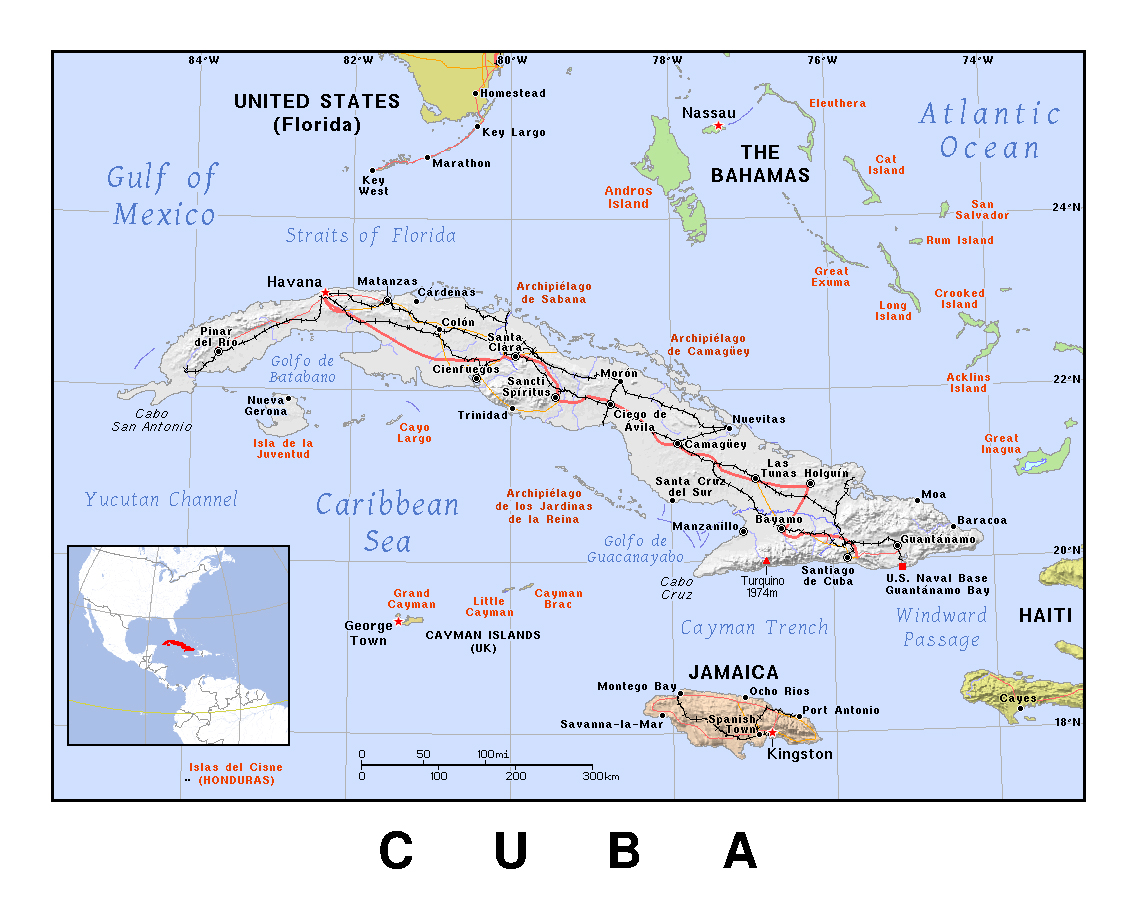
Anarchists were active in Cuba long before 1959 — the island had one of the largest anarcho-syndicalist movements in Latin America in the early 20th century. The Federación de Grupos Anarquistas de Cuba organized workers, opposed both Batista and the emerging Castroite hierarchy, and were ultimately suppressed by the revolutionary government they had helped bring to power.
Mutual Aid
Popularized by Peter Kropotkin, mutual aid stands in direct contrast to the social Darwinist notion that competition and "survival of the fittest" are the primary drivers of evolution. Instead, cooperation and voluntary reciprocity are the foundation of thriving societies.
In practice, mutual aid networks operate horizontally. They are not charity—which implies a hierarchical relationship between the giver and the receiver—but solidarity. "We keep us safe" is the guiding principle, especially visible in times of crisis when the state apparatus either fails or actively inflicts harm upon communities.